
FaceBook Group Facebook Page
Showing posts with label security. Show all posts
Showing posts with label security. Show all posts
Tuesday, February 21, 2017
Security features of the new Rs 2000 and Rs 500 notes
Security features of the new Rs 2000 and Rs 500 notes


A look at the security features of the newly-launched Rs. 2,000 and Rs. 500 notes from the RBIs stable.
Rs. 2,000 (colour: magenta)
* Is a part of the Mahatma Gandhi (New) series, with a motif of Indias Mars orbiter, the Mangalyaan on the reverse
* Size: 66mm x 166mm

Front side:
1. See through register where the numeral 2,000 can be seen when note is held against light
2. Latent image of 2,000 can be seen when the note is tilted
3. Devanagari denomination
4. Portrait of Mahatma Gandhi
5. Micro letters RBI and 2,000
6. Colour shift security thread with RBI and 2,000
7. Guarantee clause, Governors signature and RBI emblem on the right
8. Watermarks of Mahatma Gandhi and electrotype 2,000 numeral
9. Number panel with numerals growing from small to big on top left and bottom right sides
10. Denominational numeral with Rupee symbol, 2,000 in colour changing ink
11. Ashoka pillar emblem
For visually impaired:
12. Rectangle with Rs.2,000 in raised print on right
13. Seven angular bleed lines in raised print
Rs. 500
The size is 63mm x 150mm, colour is stone grey with Red Fort and Mahatma Gandhis image on each sides

Features:
1. See through register in denomination numeral
2. Latent image of the denomination numeral
3. Denomination numeral in Devnagari
4. Orientation of Mahatma Gandhis portrait changed
5. Windowed security thread changes from green to blue when note is tilted
6. Guarantee clause, Governors signature, RBI emblem shifted towards right
7. Portrait and electrotype watermarks
8. Number panel with numerals growing from small to big on top left and bottom right sides
9. Denomination in nuemrals with Rupee symbol in colour changing ink (green to blue) on bottom right
10. Ashoka pillar emblem on right
For visually impaired:
11. Circle with Rs. 500 in raised print on the right
12. Bleed lines on left and right in raised print
Available link for download

BHIM App All you need to know about functionality and app security
BHIM App All you need to know about functionality and app security
We talk to the security experts behind BHIM, the new digital payments app by the National Payments Corporation of India. Heres what we learnt about the apps security and functionality.

BHIM, the new digital payments app launched by the National Payments Corporation of India, is riddled with bugs. The app is supposed to simplify digital transactions by bringing UPI based transactions to Android users (and iOS by Jan 10). All you need to do is have your mobile number linked to your bank account, and the app will automatically retrieve other details such as your account number and branch information from your bank. This binding of a mobile number to a particular bank account is a function of UPI. So all you need is a bank registered mobile number and you are good to transfer money to anyone, anywhere instantaneously. But is it really that simple? Is it even safe to use the BHIM app? Let’s find out
BHIM: The easy-to-use app that refuses to work
When BHIM launched all of 4 days ago, it was thought to be a revolutionary new step by the government of India. But, it seems like everyone was quick to pass a judgement on the app. The idea of a single app for all banking related transactions may be a very bright and noble one, but its implementation is a whole other story. While many users who downloaded the app on launch day were able to transact with ease, the same is not the case 4 days, 3 million downloads and 5 lakh transactions later.

Some user reviews of the app on Play Store
Multiple users have reported that none of their transactions are going through after linking their accounts with the BHIM App. Besides failed transactions, users have also been facing issues trying to generate OTPs and mPINs during the registration process within the app. Now, while OTP generation could be an issue at the bank’s end, failed/invalid transactions could be a result of overloaded servers. Saket Modi, CEO of Lucideus, one of the teams behind the security of the BHIM app says, “The scalability of the server is a one time problem, once this is solved it (the app) will absolutely be at par. When you make credit or debit card transactions, there are no issues because they expect an X amount of traffic and that is there. Plus minus 10-20% is ok. BHIM is a new thing and three million downloads in three days, I don’t think has happened anywhere in the world till date.” Comparing private companies and government organisations, Modi also pointed out that the pace at which decisions are made in the latter is usually slower, because govt organisations follows a set procedure, hence when a decision is reached to increase the capacity of the servers supporting BHIM, the problem of transaction errors should be fixed “very soon.”
That said, Modi also pointed out that “It’s not that simple to push an update to the app because of so many dynamic variables which are involved.” So if you were hoping the app would stop generating transaction/registeration errors overnight, you might have to wait a while before things settle into a smooth functioning pattern.
Those who were utterly unsuccessful at linking their bank accounts with BHIM, may have to uninstall the application and download it again. It took us multiple attempts before we could get our account linked to the app. In some cases, certain bank accounts are still not being able to function in tandem with the app. For example, a Standard Chartered account refuses to set up a 6-digit UPI pin using the BHIM app, even after multiple tries.
How secure is the BHIM app?
As of now, it seems like BHIM is running a pretty tight ship as far as security is concerned; an impression we have after speaking to the security team behind the app. Although Lucideus’ Modi says “nothing can be 100% safe,” he believes that BHIM’s three-factor authentication is strong enough to keep out amateur hackers or as he calls them “script kiddies.”
“Your phone number and your device ID is bound with this app. It really takes the ownership of that device. By this I mean, it’s an authentication mechanism in itself. Why? Because number one, that device will be operational at that time. The data that it (BHIM) is storing on the device is also encrypted and all the new operating systems including iOS and Android uses containerisation, which means my apps data only I can access, nobody else can access. That’s a standard feature true for any application running on Android, which is true for this app also,” says Modi.
What this essentially means is that the data generated by BHIM is stored in an authenticated and encrypted area of a user’s mobile device. The practice is also sometimes reffered to as application sandboxing, although in its true sense, sandboxing is supposed to isolate applications completely, which is not the case with BHIM. In fact, Modi tells us that the 4-digit PIN used access the app, is stored on a users device itself. This could be accessed by a hacker if your phone is ever stolen, as Modi points out that “there is nothing known as 100% encryption.” But, the app also needs a 4 or 6 digit UPI PIN to transact or check other account details, which is in turn stored on the UPI servers and will act as another step of authentication before a hacker can make use of the BHIM app to transact.
So essentially, the three-factor authentication includes, the binding of the device ID and the app, the registered mobile number with the bank and the UPI PIN that you set for transactions. “Even if your phone gets stolen and someone replicates your SIM by giving fake documents to an a service provider, they will not be able to transact on the app,” assures Modi.
While the steps taken to secure the app seem pretty stringent, what remains to be seen is how security is kept up on the apps server, which could be the main target of malicious attackers. In the near future, the government is also looking to add fingerprint authentication for UPI transactions, which will still need a PIN or two, says Modi.
Click here to know how to use the BHIM app
 To know job updates in FaceBook
FaceBook Group Facebook Page
Available link for download
Tuesday, January 24, 2017
Bharat Electronics Limited – BEL Recruitment 2017 – 13 Junior Security Supervisor Security Guard Fire Guard Vacancies – Last Date 20 November 2016
Bharat Electronics Limited – BEL Recruitment 2017 – 13 Junior Security Supervisor Security Guard Fire Guard Vacancies – Last Date 20 November 2016
BEL Recruitment 2017 – 2016

BEL Optronic Devices Limited (BELOP) invites Applications for the post of 13 Junior Security Supervisor, Security Guard & Fire Guard on permanent basis for its Kotdwara Unit (Uttarakhand). Apply Before 20 November 2016.
Job Details :
- Post Name : Junior Security Supervisor
- No. of Vacancies : 04 Posts
- Pay Scale : Rs. 10050 – 25450 /-
- Post Name : Security Guard
- No. of Vacancies : 06 Posts
- Pay Scale : Rs. 8330 -22000 /-
- Post Name : Fire Guard
- No. of Vacancies : 03 Posts
- Pay Scale : Rs. 8330 -22000 /-
Eligibility Criteria for BEL Recruitment :
- Educational Qualification : SSLC (Pass) and Minimum 15 years of service in the Army (preferably Artillery, Armoured Corps or Infantry).
- Nationality : Indian
Age Limit : As on 01.10.2016
- For Junior Security Supervisor : 50 years
- For Security Guard & Fire Guard : 40 years
Job Location : Kotdwara (Uttarakhand)
Selection Process : Selection will be based on written test and physical test.
Application Fee : General & OBC Candidates have to Pay Rs.300/- through Demand Draft in Favour Of Bharat Electronics Limited” payable at Kotdwara. SC and ST candidates are exempted from payment of application fee.
How to Apply BEL Vacancy : Interested candidates may apply in prescribed Application Form along with self attested photocopies of the documents/enclosures & DD send to The Manager (HR&A), Bharat Electronics Limited, Kotdwara , Pauri Garwhal , Uttarkhand – 246149 on or before 20.11.2016.
Important Dates to Remember :
- Last Date of Submission of Application form : 20.11.2016
Important Links :
- Detail Advertisement Link : http://www.bel-india.com/writereaddata/Security%20-%20BEL%20-%20Kotdwara.docx
- DownloadApplicationForm:http://www.bel-india.com/writereaddata/Application%20Format%20-%20Security.docx
- To know job updates in FaceBook
Available link for download
Sunday, January 22, 2017
New Rs 50 Rs 100 Rs 1 000 Notes Design Security Features How To Exchange Old Currency
New Rs 50 Rs 100 Rs 1 000 Notes Design Security Features How To Exchange Old Currency
New Rs.50, Rs.100, Rs.1,000 Notes Design
The lower denomination currency notes of Rs 100 and Rs 50 will hang in as a valid currency in the circulating medium. Economic Affairs Secretary Shaktikanta Das stated that edification and improvement in the appearance of currency notes of Rs.1,000, Rs.100, Rs.50 denominations will be executed. The new notes of Rs.2,000 are being issued because of unpredictable inflation rates. Banks and post offices have already started issuing the new series of Rs.500 and Rs.2,000 notes. The Reserve Bank of India will also bring new possible changes in Rs.50, Rs.100, Rs.1,000 Notes.
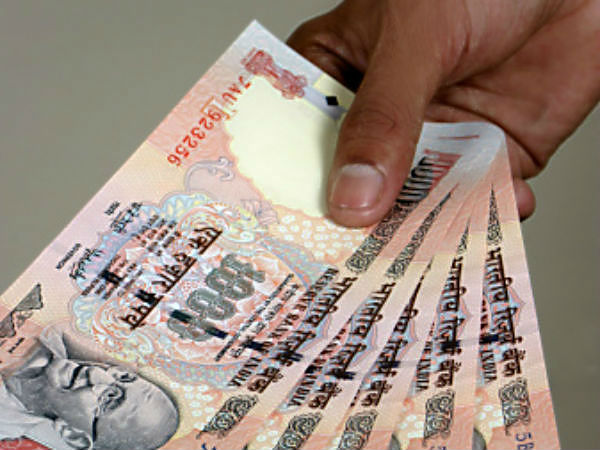
New Rs.50, Rs.100, Rs.1,000 Notes Release Date
The government on Tuesday had withdrawn the use of old Rs 500 and Rs 1,000 notes to whitewash black money and terror financing. The colour new Rs. 500 note is stone grey and approximately will be in size of 66mm x 150mm. Newly shipped Rs 2,000 notes will be of magenta colour with Mangalayan designated on the reverse side. The new banknotes of Rs 500 and Rs. 2000 are distinctive in the premises of series in colour, size, theme, a ground of security features and design element. The Reserve Bank of India is going to bring forward Rs. 2000 denomination banknotes in relevance to Mahatma Gandhi (New) Series. It will delineate the Image of Red Fort with Indian flag on the reverse side.
New Rs.50, Rs.100, Rs.1,000 Notes Features
New Rs.50, Rs.100, Rs.1,000 Notes with the new specification, Design and Security Features can act as the prime regulator of black money. The signature in all the new notes Rs.50, Rs.100 and Rs.1,000 will be of Dr Urjit R. Patel, Governor of RBI. A semblance of Swachh Bharat Logo with the printing as 2016 will be lithographed on the Banknote. In order to protect a country from the excessive supply of money government of India has come in active mode. Proposal to allow all foreign institutional investors in commodity trading has been left for the official decision. SEBI has been imparted with the duty to look into this proposal to define its scrutiny.
To know job updates in FaceBook
FaceBook Group Facebook Page
Available link for download
Subscribe to:
Posts (Atom)